When Disney turned Chiltern into a town called Barambogie
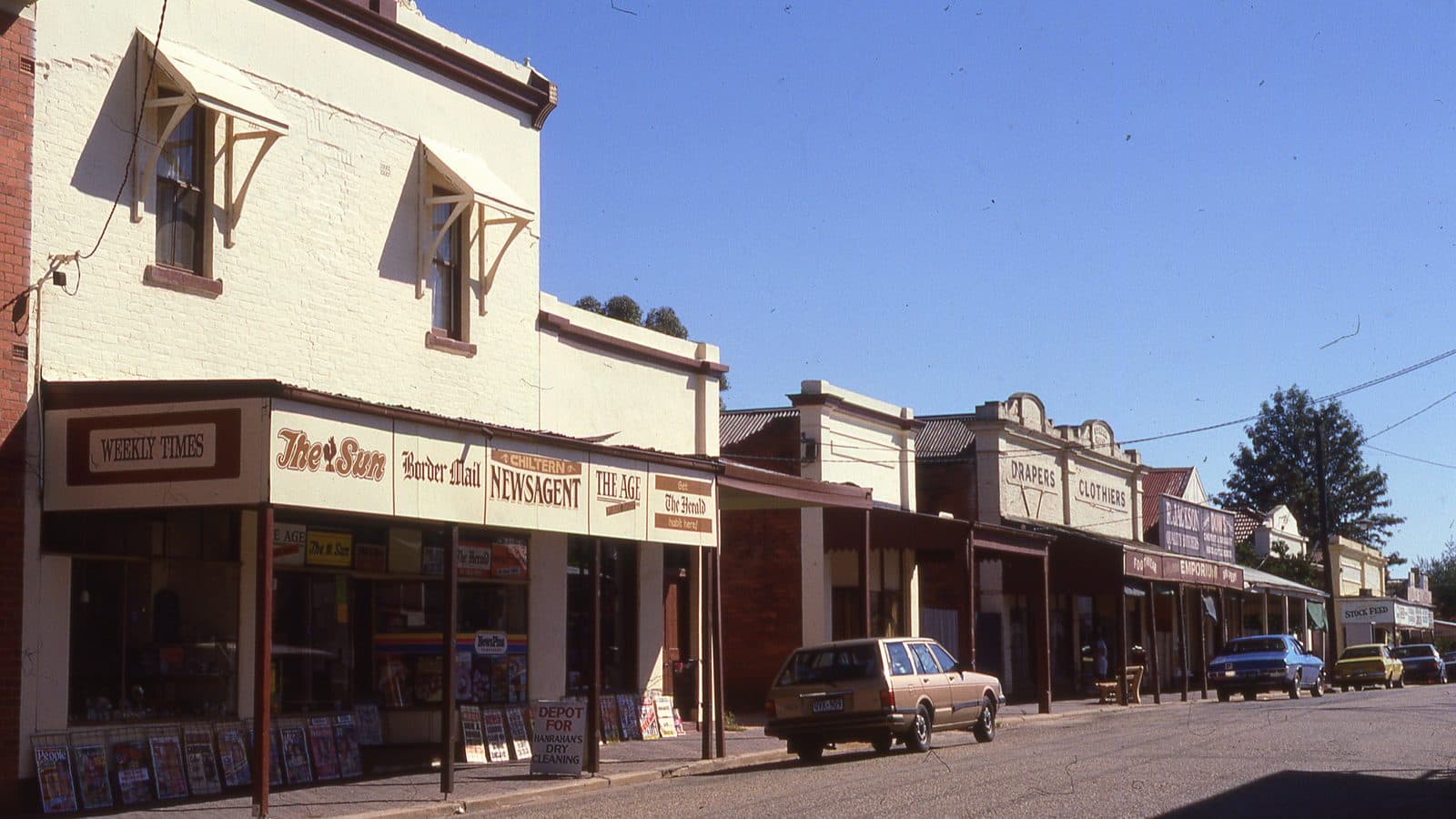
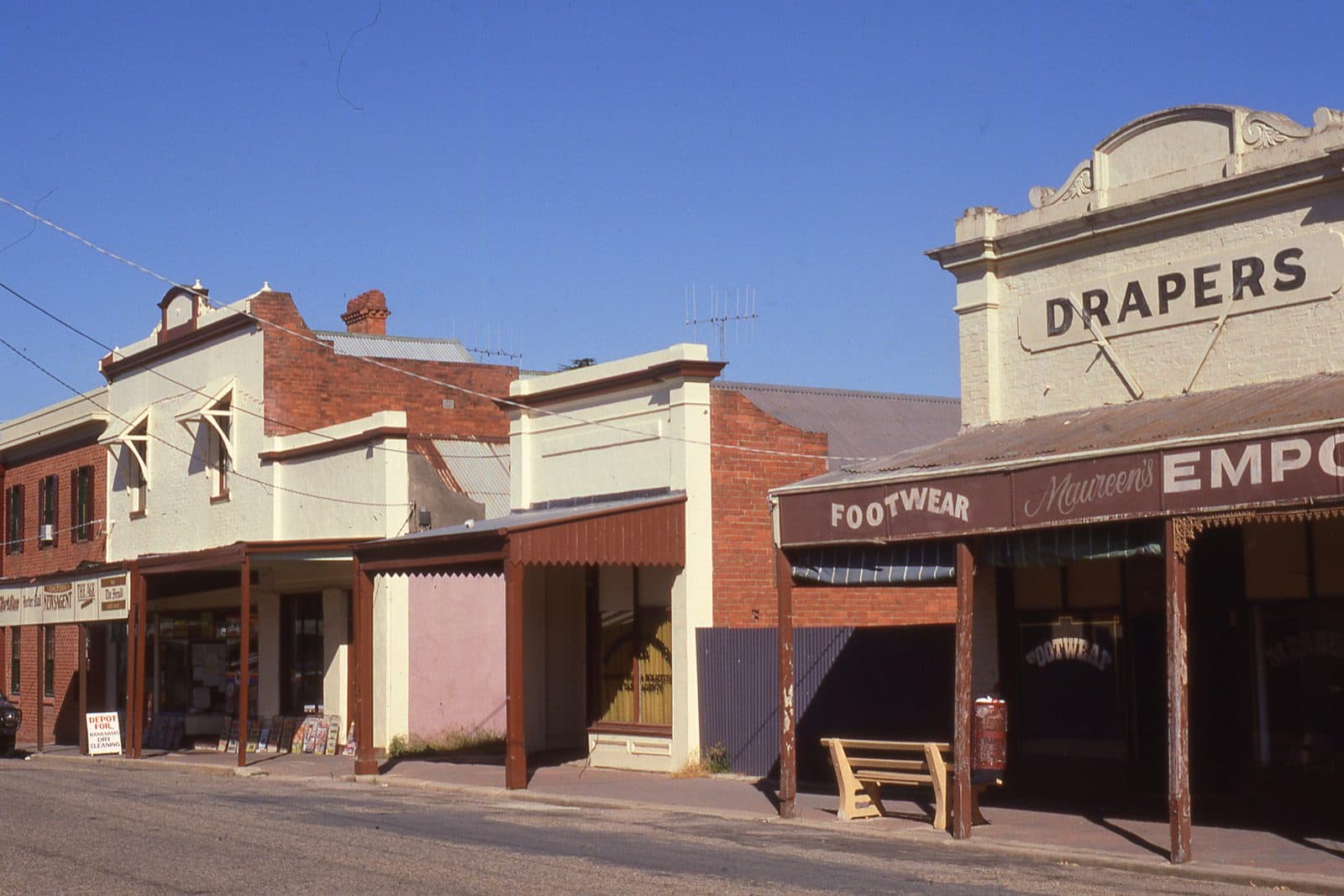
Chiltern's main street has been photographed a great many times by people who do not live here, and most of them are after the same thing. A row of verandahs, shopfronts with the old trades still painted up on the parapets, and no sign anywhere of the century we are actually in. In late 1974 a Disney crew came looking for exactly that, and stayed to shoot a film.
The seven weeks that ended in Chiltern
They had been at it a while by the time they got here. The location people had spent seven weeks driving around the country looking for somewhere that could pass for a town between the wars, and they were close to giving the search up altogether. The film was Ride a Wild Pony. Don Chaffey directing, Jack Cardiff behind the camera with an Academy Award already to his name. Chiltern got the part, and on screen the town is not Chiltern at all. It is called Barambogie.
Mostly a matter of taking things away
Turning a real town into an invented one is mostly subtraction. They put gravel down over the sealed roads so the surface would read as an old road. They pulled the street signs out, changed the streetlights, and altered shopfronts along the way, and brought in old cars to stand where the new ones had been parked that morning. None of it is the sort of thing you notice while it is being done. All of it is the sort of thing a camera notices straight away.
A boy, a girl and one pony
The story was Australian well before Disney got hold of it. James Aldridge wrote A Sporting Proposition in 1973. He was born at White Hills in Victoria in 1918 and the family shifted up to Swan Hill while he was still small, and a good deal of his Australian writing comes out of that country.
A farm boy named Scott buys an unbroken pony to ride to school, and the pony goes missing. It turns up again as Bo, given to Josie, a grazier's daughter who has had polio and cannot walk. Both children know the animal is theirs, and neither of them is lying, which is the whole trouble with it. The argument gets out of the two families and into the town, the town takes sides, and eventually it goes to court.
The scene in the public gallery
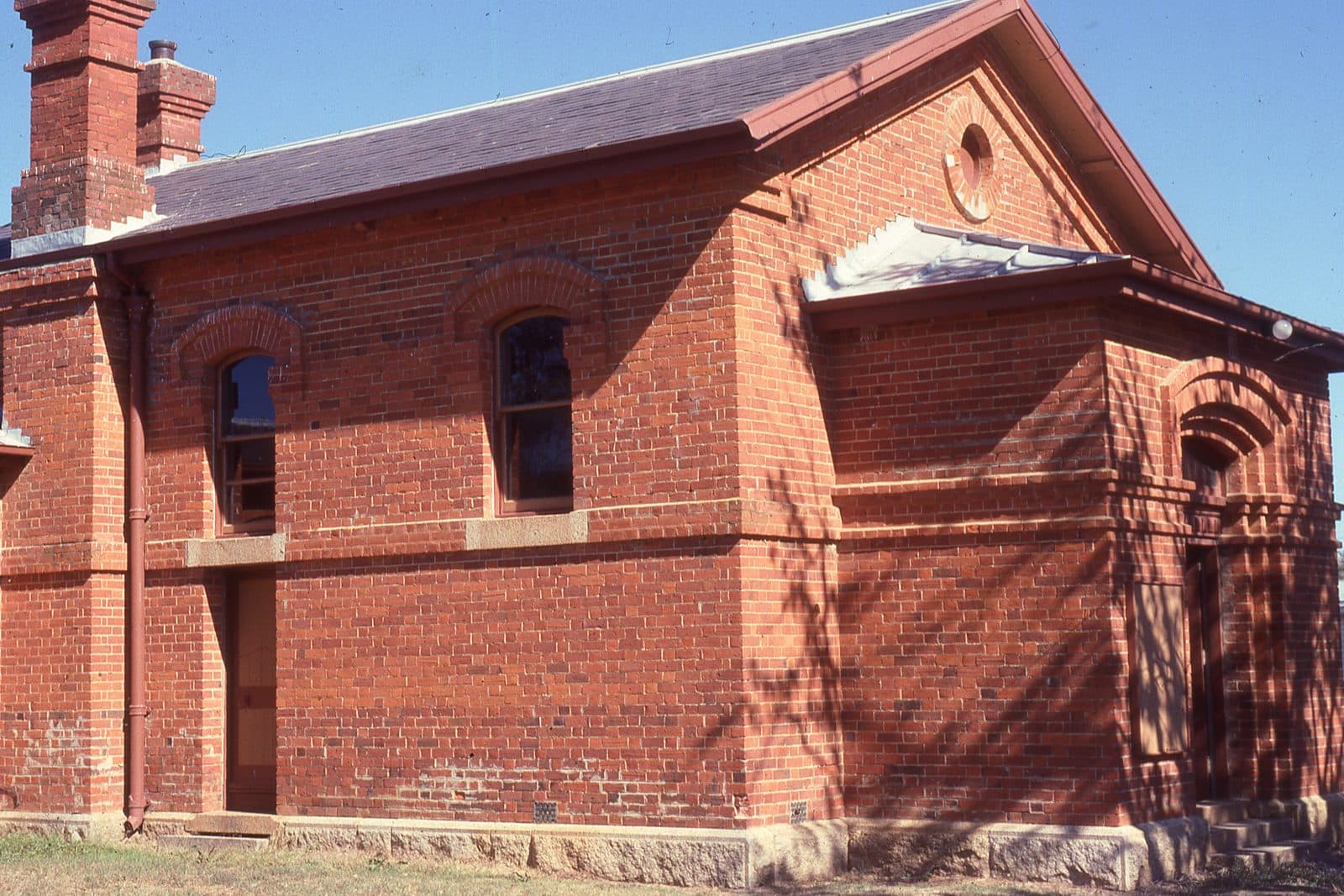
Chiltern's courthouse plays the courthouse. Rhonda Summerfield, who lives here, was one of the crowd sitting in the public gallery for that scene, and had a part as a secretary besides. What she remembers is less the drama of it than the shape of the days.
You had to come into town at six in the morning to be dressed. Lunchtime you were fed from the caterer's vans, then at 5 o'clock in the evening you got undressed and went home.
Brann's Store was handed over to hair and make-up for the duration. The farm and station scenes went elsewhere, up over the border into New South Wales, so what Chiltern supplied was the town itself and the people to fill it. The ponies, for what it is worth, were Welsh.
What the street kept
The picture went out at Christmas 1975, with Robert Bettles as Scott and Eva Griffith as Josie. By then the gravel was up off the road, the signs were back in, and the town had gone back to being Chiltern. What did not change is the reason they picked it in the first place.
The gold here came out of the ground in late 1858 and early 1859, and it was deep. This was never creek country you could scratch at. The wet leads went four hundred feet down and took men who knew the work, and money of that sort goes up as brick and parapet and painted signage. Then the rush moves on and nobody has any particular reason to knock it down again, so it stands there through the century that follows, waiting for somebody to want it.
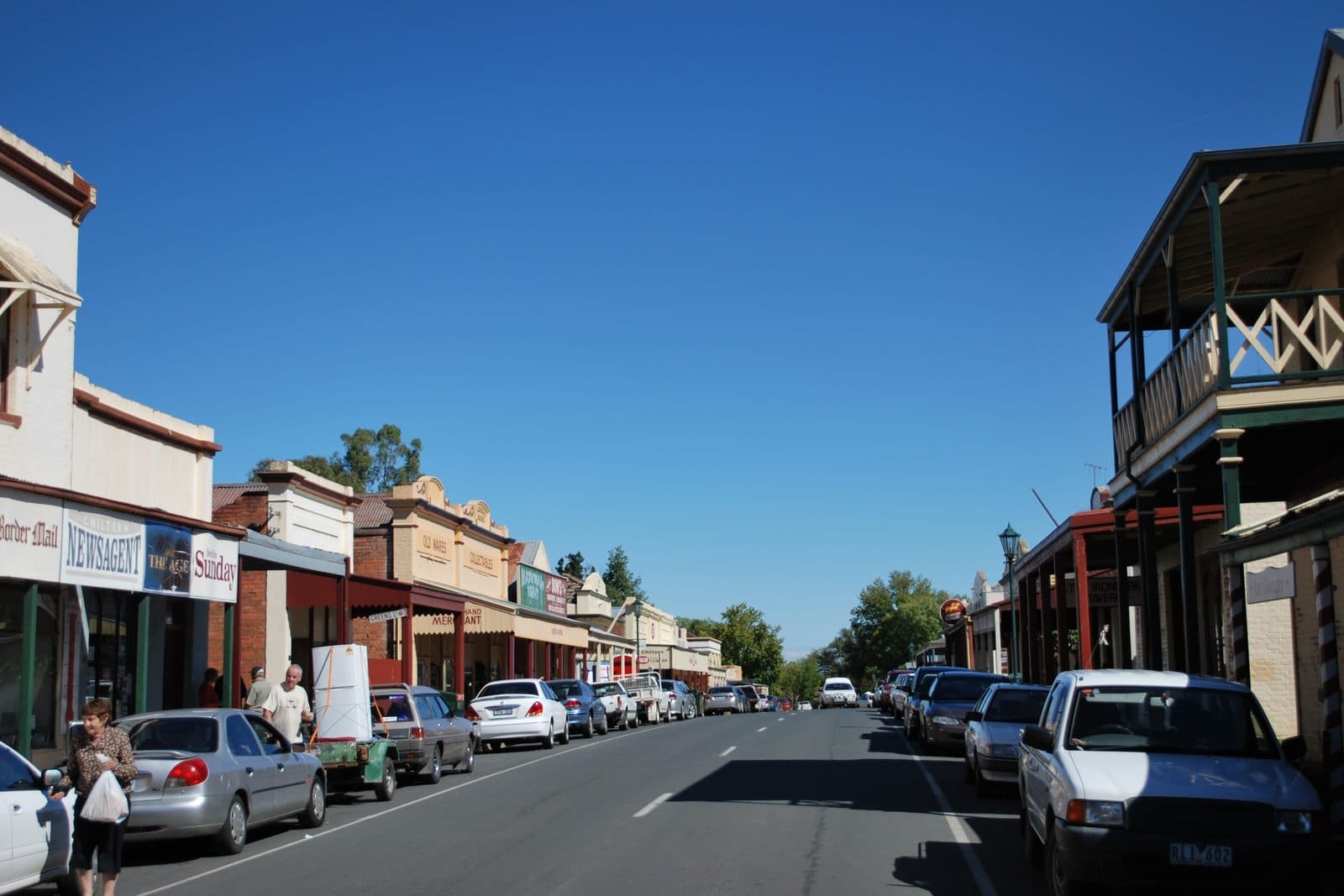
The newsagent is still the newsagent. That is the part that surprises people who come for the buildings, and it is also the reason the buildings are worth coming for. A street kept as a set would look like a set. This one gets used.
It has happened again since, on a smaller scale. In 2009 a band called Art vs Science shot the video for Parlez-vous Francais? here, the whole clip, and it went on to take that year's J Award for the best music video in the country. Different decade, very different noise coming out of the speakers, same footpath.
None of it is why anybody lives here. For most of the people who ended up on screen it was a few odd weeks out of a long working life, and then it was back to it. But it is a good thing to know about a street while you are standing in the middle of one. We are at 27-29 Conness Street, a little along from the buildings in these pictures. We open at seven and the bread is out early, and the verandah is a fair place to stand and look up from.
Thank you for reading.
More from the Journal
Tomatoes by Cup Day: Spring Planting Around Chiltern
Plenty of Victorian gardeners still wait for Melbourne Cup Day to plant their tomatoes. Around Chiltern the reason is frost, and the rule bends a little.
Read
Lake Anderson, the Gold Mine That Became Chiltern's Lake
Nobody dug Lake Anderson as a lake. It is what was left when the ground over an old gold mine sank, and the town has made good use of it since.
Read
Orchid Season in Chiltern's Ironbark Forest
For a few weeks each spring the forest floor outside town does something the rest of the year gives no warning of, and most of it is orchids.
Read