Magpie season around Chiltern, and the six weeks it lasts
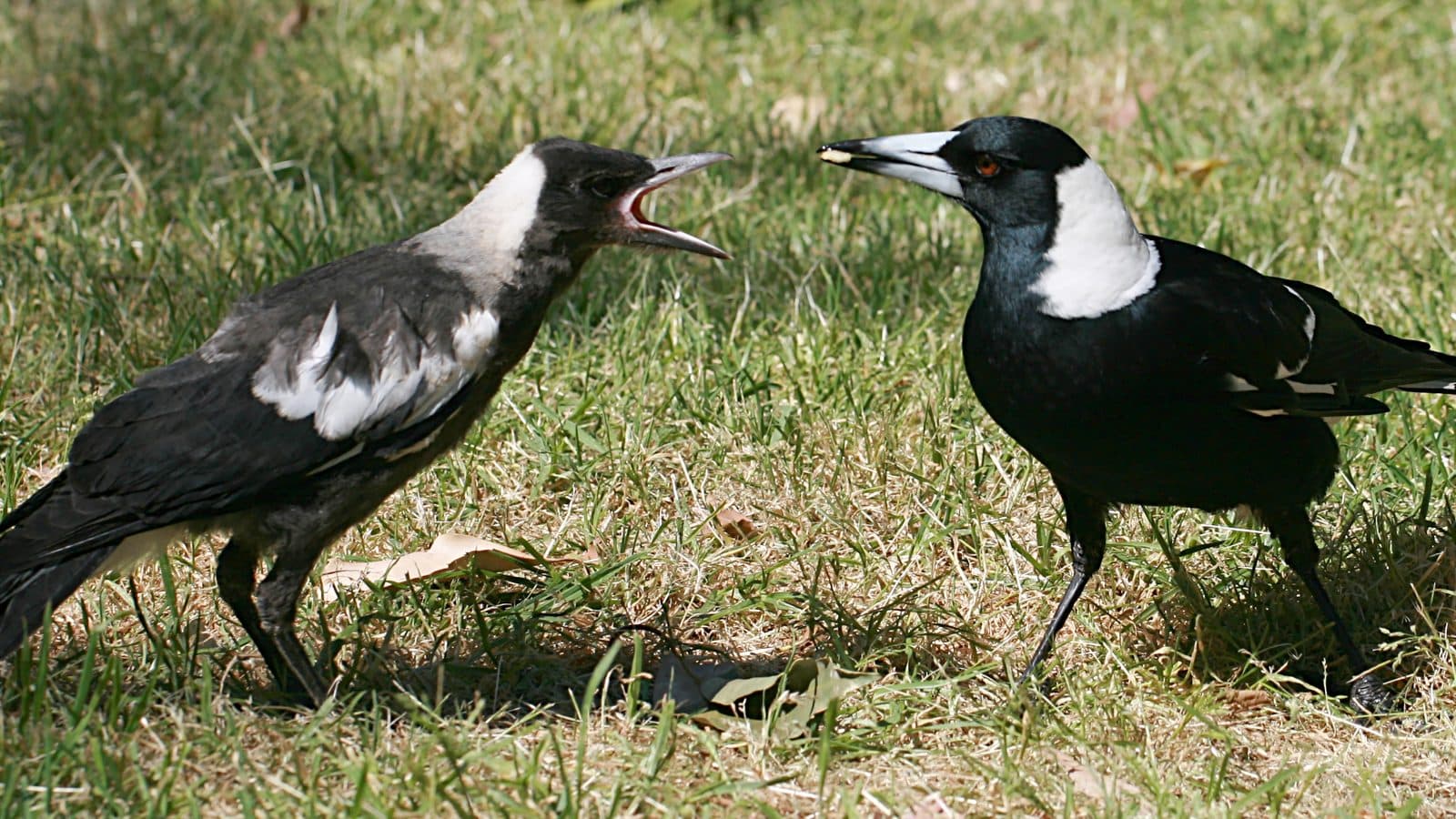
You hear them before there is any light in it. Some time in the back half of winter the magpies start earlier and carry on longer, that rolling warble coming out of the gums along the road while it is still properly dark, two or three of them answering one another across the paddock. They have been here all year, the same birds on the same ground. It is the singing that changes first, and a few weeks after that, the temper.
The weeks that follow are what people around here call magpie season, and what they have in mind is the swooping. It is a smaller thing than its reputation. Most magpies never swoop at anybody, and the ones that do are at it for about six weeks and then stop.
What the birds are actually doing
The Australian magpie, Gymnorhina tibicen, nests in the cooler parts of the country from about August or September, and in some years the business runs on into November. The female builds and does the sitting. Two to five eggs, pale blue or green, roughly twenty days before they hatch, then a few more weeks of both parents going back and forth with whatever they can turn up in the grass. Anyone who has watched a magpie stalking a lawn, head tilted over, listening for something moving under the surface, has seen the working half of it.
Of the ones that do, almost all are male, something like ninety-nine in a hundred. He is defending a nest with something helpless in it, and nothing wider than that. When the young are out and about he stops, and the bird that saw you off in September will ignore you entirely by December.
The bird itself
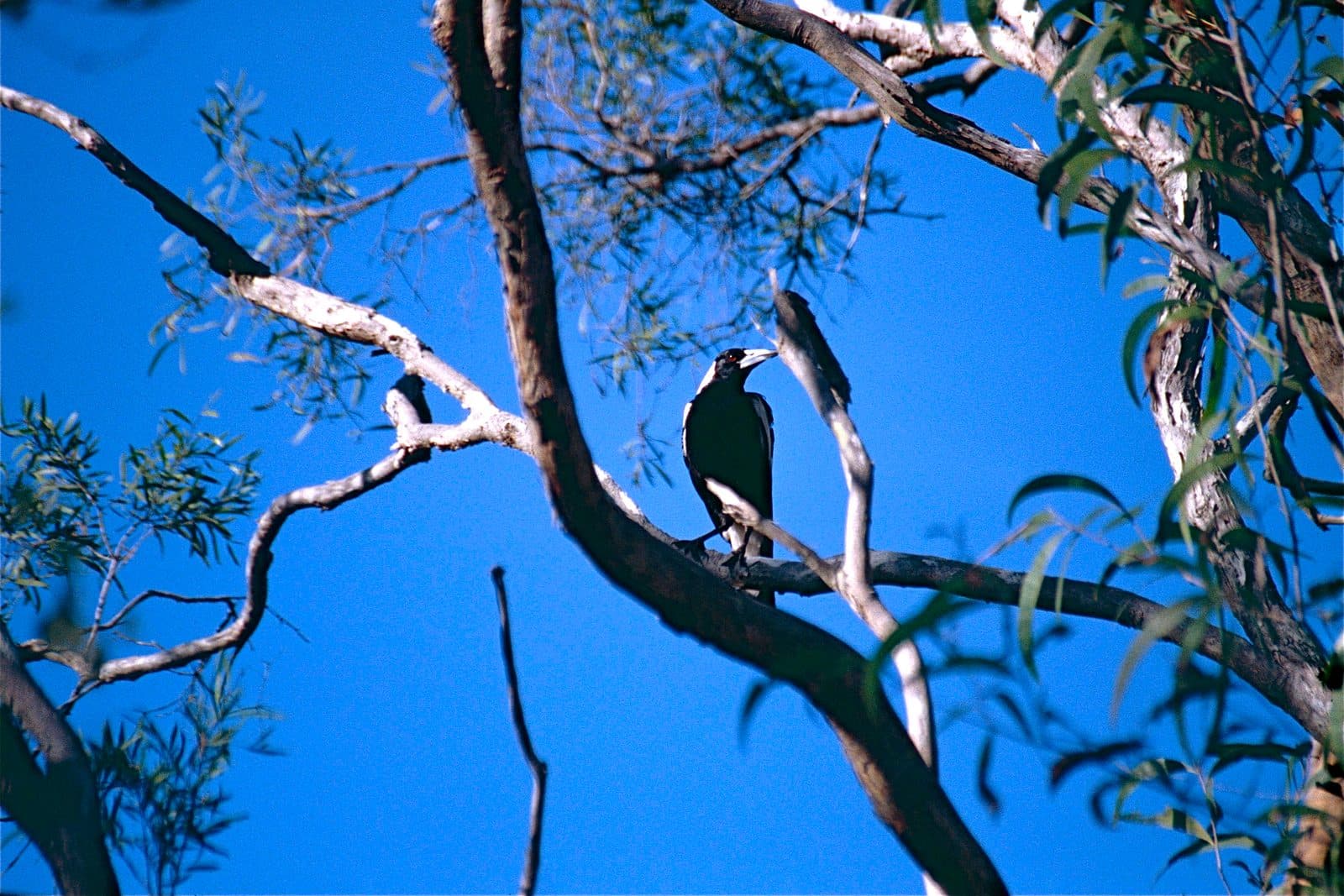
Magpies stay put and they live a long time. A group can hold the same territory for more than ten years, and a bird may see out twenty-five or thirty. That carolling before dawn is part of how the boundaries get kept, a line sung rather than fought over. They are also very good at telling people apart, up to a hundred individual faces by the research, so the bird on your corner knows you from the postman and knows both of you from whoever once threw something at it.
The six weeks, and how to get past
They defend close in. Most swooping happens within fifty to a hundred metres of the nest, so the whole problem is usually one tree and one short stretch of footpath. Go around it if there is another way. If there is not, the advice is the same everywhere and it is dull on purpose.
- Walk. Running reads as a retreat and usually brings another pass.
- Keep the bird in sight. They come from behind, and most will not commit while you are watching them.
- Something on your head helps: a hat, or an umbrella held up.
- Go through in company if you can, because a single person is the easier mark.
- Leave the nest alone. Magpies are protected under the Wildlife Act 1975, and interfering with one is both against the law and the surest way to make a bird worse.
Because they hold their ground so long, the bird at a given corner this spring is very likely the one from last spring and the one before that. People end up on terms with them. Somebody takes the long way round for a month without thinking much about it, somebody else has been talking to the same magpie over a back fence for years. There is a fair amount of quiet negotiation going on around a country town in September that never gets written down.
The singing is the part worth staying for anyway. It comes back before anything else does, well before the mornings soften, and it carries on long after the last of the swooping has finished and the young ones are trailing their parents around the grass complaining about the service. If you are out early while the district is loud with it, call in on the way through. We open at seven and the loaves are out by then.
Thank you for reading.
More from the Journal

Tomatoes by Cup Day: Spring Planting Around Chiltern
Plenty of Victorian gardeners still wait for Melbourne Cup Day to plant their tomatoes. Around Chiltern the reason is frost, and the rule bends a little.
Read
Lake Anderson, the Gold Mine That Became Chiltern's Lake
Nobody dug Lake Anderson as a lake. It is what was left when the ground over an old gold mine sank, and the town has made good use of it since.
Read
Orchid Season in Chiltern's Ironbark Forest
For a few weeks each spring the forest floor outside town does something the rest of the year gives no warning of, and most of it is orchids.
Read