The 48-Hour Ferment: Why Chiltern Sourdough Takes Its Time
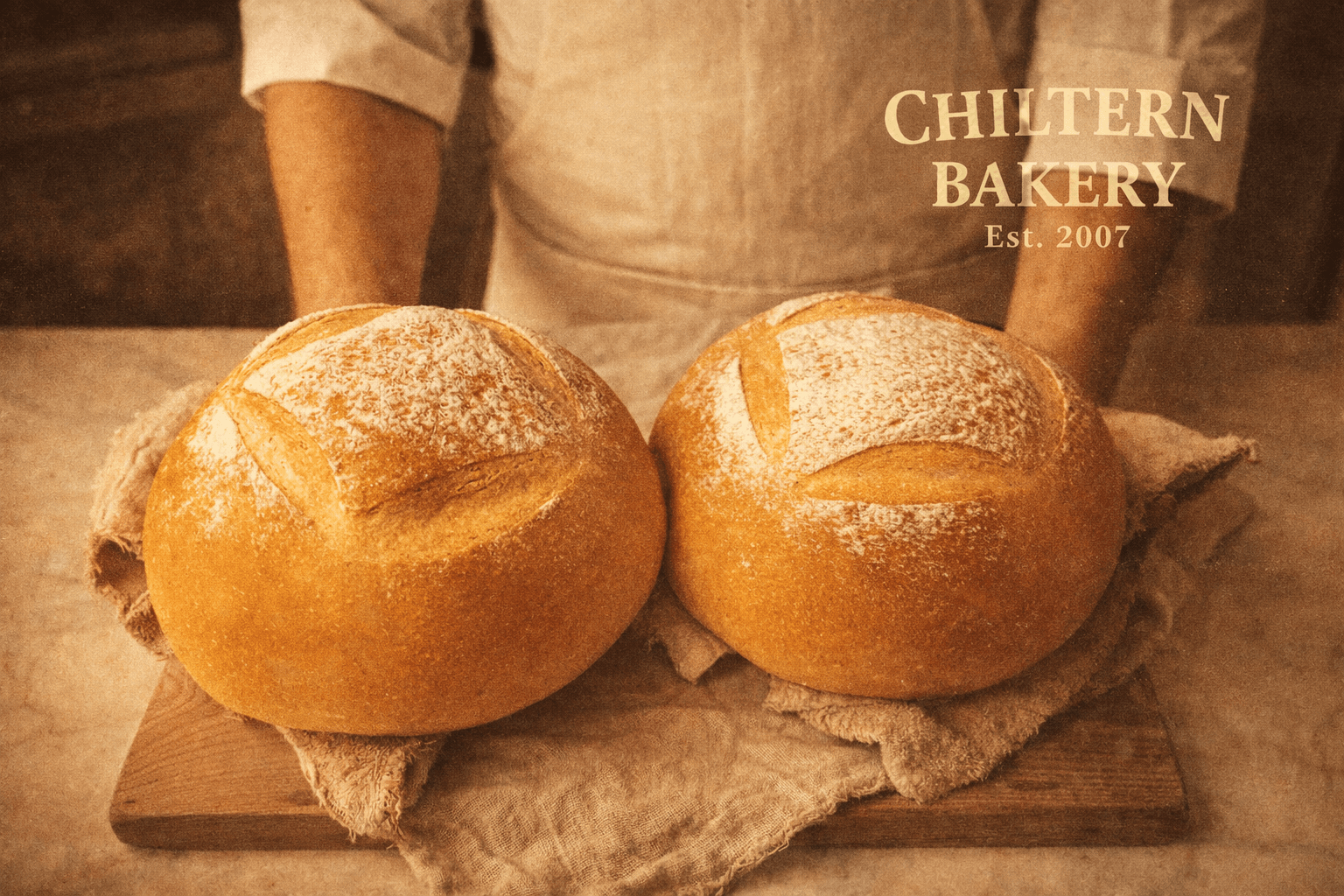
Good bread cannot be hurried. Every loaf of our signature sourdough at Chiltern is a 48-hour ferment — forty-eight hours in slow, cold retard before we shape it, score it, and slide it into the oven. That patience is not nostalgia — it is chemistry.
Why a 48-hour ferment?
A short ferment produces a loaf that rises dutifully but tastes of little. A long, cold ferment gives wild yeasts and lactic bacteria time to develop the complex, tangy aromatics that a good sourdough is famous for. Enzymes break down starches into sugars the yeast can work with slowly; proteins relax into the open, airy crumb we love.
- Hour 0–6: autolyse and first mixing. Flour and water meet starter.
- Hour 6–24: bulk fermentation at cool room temperature, with gentle folds every few hours.
- Hour 24–48: shaped loaves retard in the fridge, where flavour deepens.
- Hour 48: into a stone-decked oven at 240°C for a darkly caramelised crust.
“You cannot rush a slow thing and call it the same thing.”
If you cut a slice from one of our two-day loaves and hold it up to the light, you will see the crumb — open, glossy, faintly uneven. That unevenness is not a flaw. It is the signature of a loaf that took its time.
If you are nearby, stop in at Chiltern Bakery — the two-day loaves wait on the cooling racks most mornings, crust still warm to the touch. The earlier post on a morning at our bakery shows the hours that brought them there.