Shearing season, and the shed Tom Roberts painted
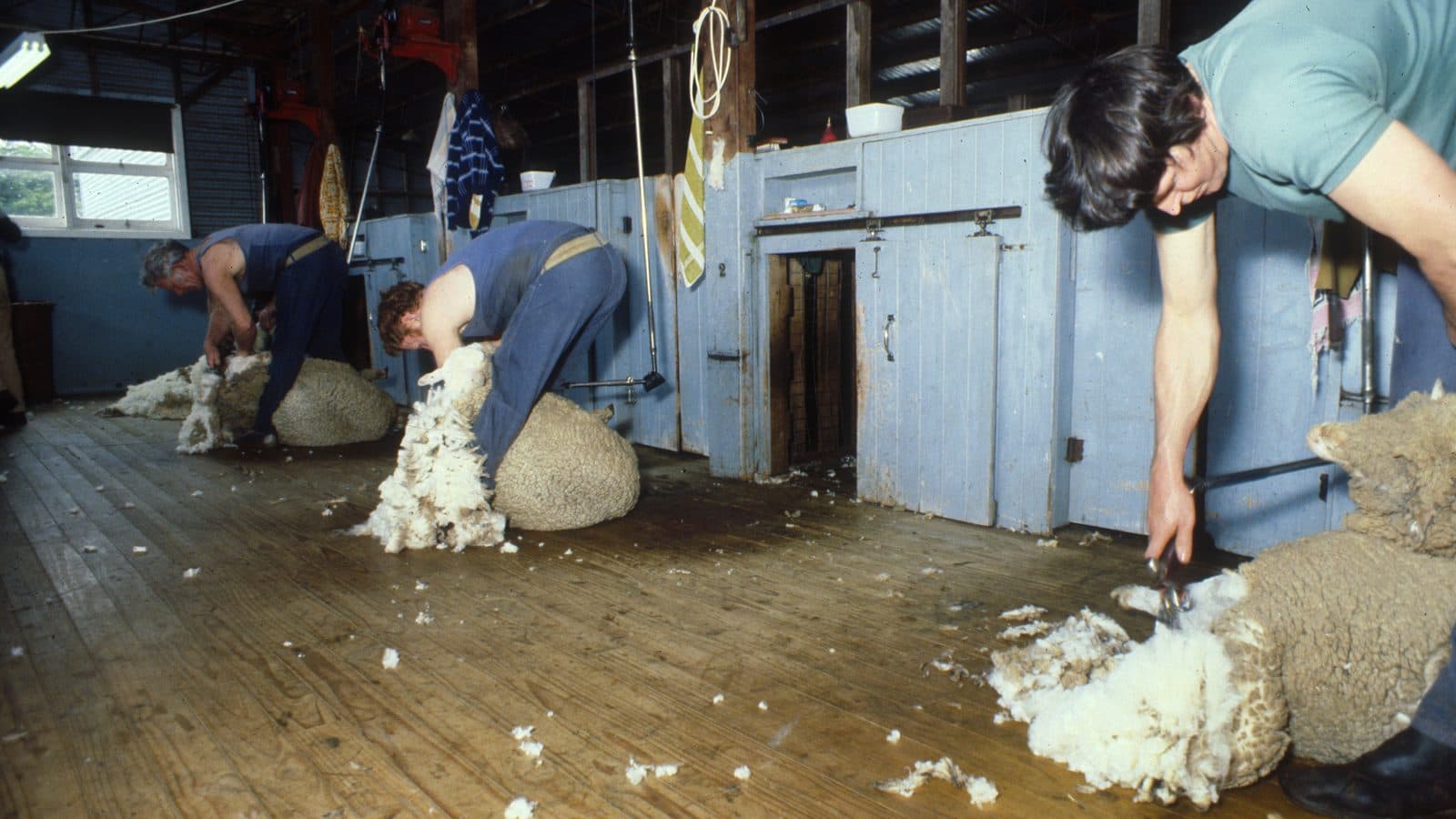
The wool comes off in spring. Drive out of Chiltern in any direction this time of year and sooner or later you pass a paddock of sheep that look half the size they did a fortnight ago, standing about in the sun as though something has been done to them that nobody explained. The shearers have been through. Somewhere back behind the trees there is a shed that started work well before the rest of us were up.
Why shearing happens in spring
The reasons are practical. A fleece left on through summer fills up with grass seed and gives the blowflies somewhere to lay, and ewes are generally done before they lamb. It has to be late enough that a shorn sheep is not left standing in a cold snap, and early enough to be finished before the heat arrives. Every property lands on a slightly different week, and spring is when most of it happens.
A shed at work runs to its own clock. The day comes in four two-hour runs with half an hour for smoko in between and an hour at lunch, and the pace is set by people paid by the sheep rather than by the hour. A decent shed puts through several hundred in a day. The very big ones handle more than three thousand.
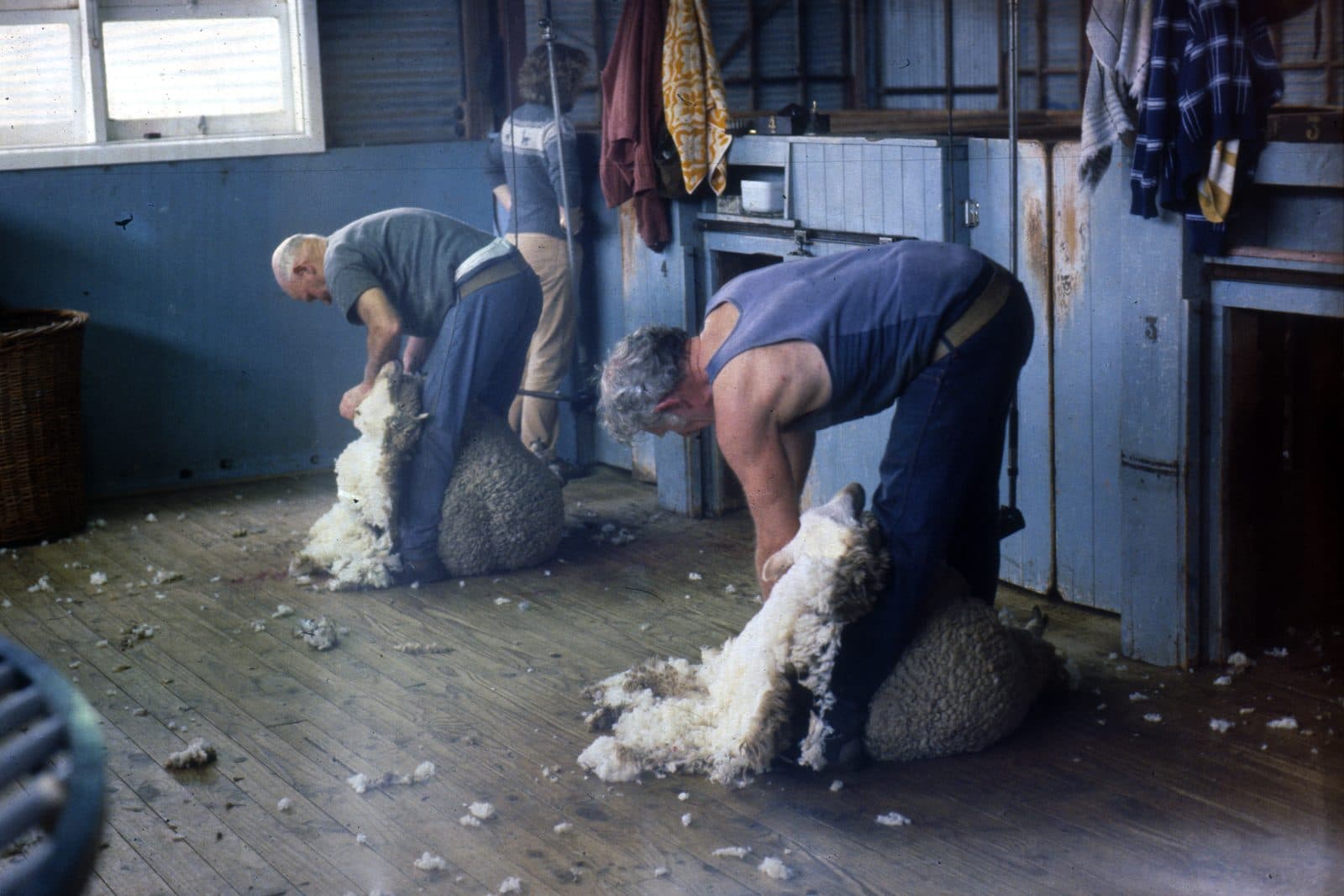
The shearer is only one of the jobs in the building. A rouseabout gathers the fleece off the board and throws it out flat on the table in one piece, the belly wool and the dirty edges come away, a classer decides what grade it is, and a presser packs it into bales. The tools changed a long time ago and then more or less stopped. Machine shears came in after 1888, and by 1915 most of the big station sheds had them running off a steam engine or an oil engine.
The shed over the river
In the late spring of 1888 a painter turned up at Brocklesby Station, out past Corowa on the New South Wales side of the Murray, and spent the shearing sketching on the floor of the shed with the work going on around him. His name was Tom Roberts. He came back for the next two shearing seasons with the canvas itself, and finished the picture in his Melbourne studio in 1890.
You have almost certainly seen it. A shearer in a pink striped shirt is bent over his ram, halfway down a shed that runs away behind him into shadow, and there is wool all over a floor worn pale by boots. It hangs at NGV Australia in Federation Square, and has belonged to the gallery since the Felton Bequest bought it in 1932.
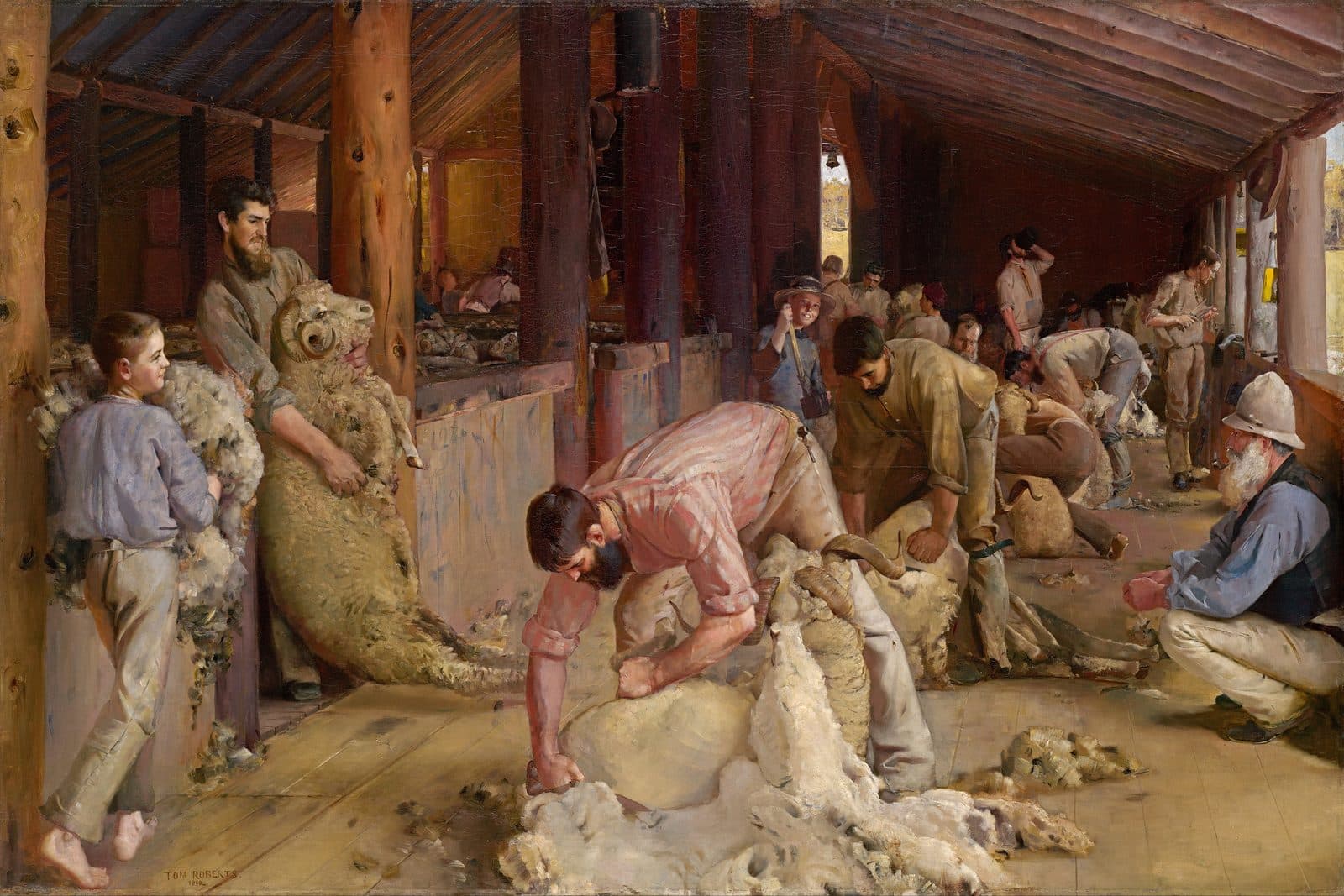
The young figure off to the side with an armful of fleece, the one most people take for a boy, was a girl. Susan Bourne, nine years old at the time, who lived on until 1979. She did more than stand there and be painted. When Roberts wanted the air in the shed to look the way it looks when a shed is working, she walked about kicking up the dust for him.
That is the strange thing about the picture. A century on, in a shed with electric lights and machine handpieces, a shearer stands the way Roberts painted him, folded right over with one arm holding the sheep steady while the fleece peels off in a single piece onto the boards. Almost everything else about the work has changed, and that one shape has stayed where it was.
The shed that named a valley
There is another shed worth knowing about, a good deal closer to home, and it has been gone for well over a century. In 1838 somebody put up a rough building on the creek that runs down past Beechworth, to work sheep being droved across from New South Wales. That was fourteen years before anyone in the district thought to go looking for gold.
Gold turned up at Spring Creek in February 1852, and at Reid's Creek nine months after that. The diggings that filled the valley took their name from the building already standing in it, so the place has been called the Woolshed ever since. At its peak in 1857 it carried twenty-nine storekeepers and fourteen hotels. Then the best of the ground was worked out and the miners packed up and went looking at Rutherglen and Chiltern, which is part of the reason there is a town here at all.
None of the wool stays. It goes into bales and off to a store somewhere and nobody around here sees it again. What stays is the look of the paddocks at the end of it, bare and tidy and somehow larger, and the sheep out in the sun with their coats off.
We open at seven. The oven goes on at three and the first loaves are in by half past four, so there is bread out early whatever the morning is doing. Drop in on your way through.
Thank you for reading.
More from the Journal
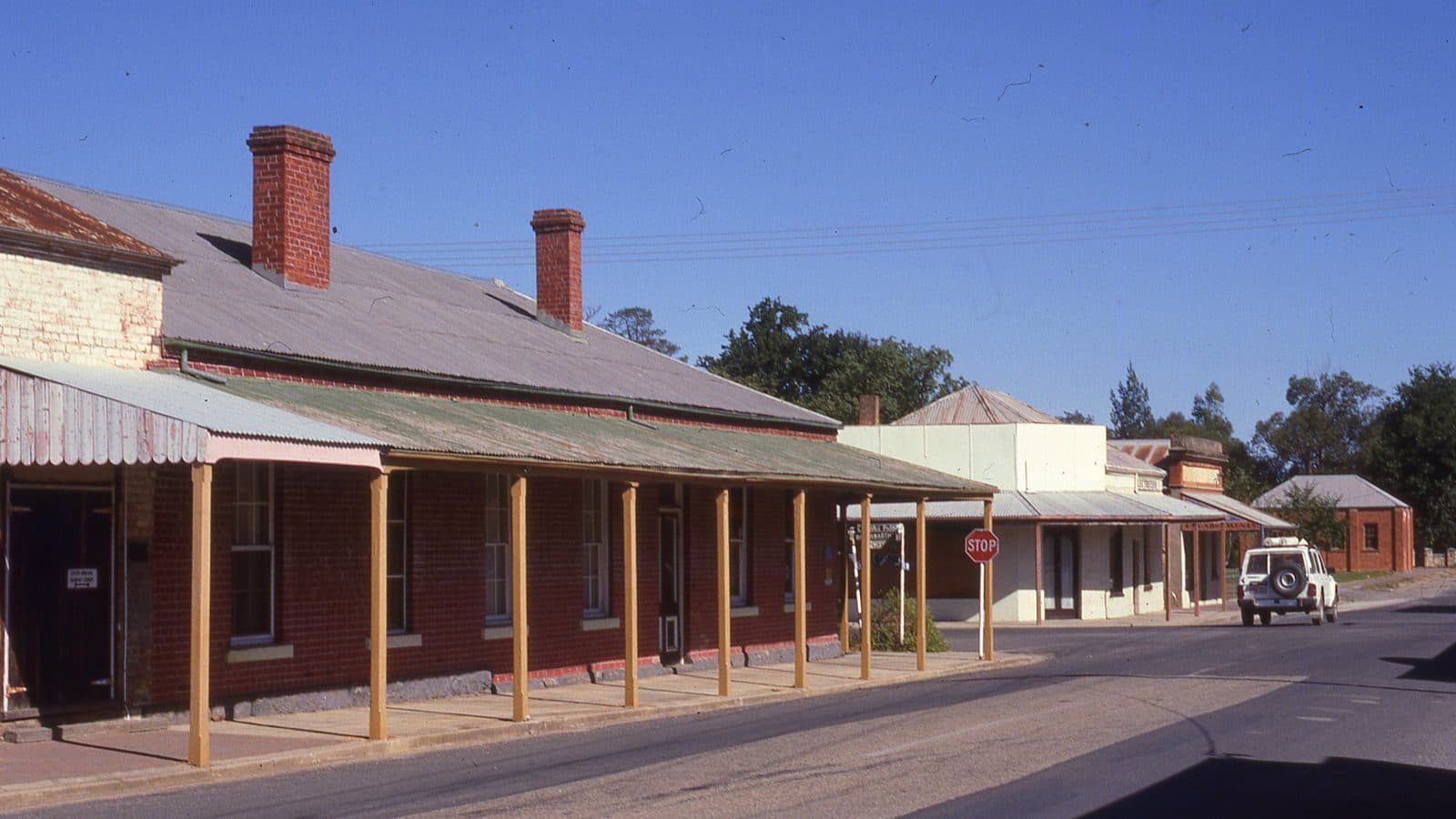
Dow's Pharmacy, Chiltern: the shop left as it was
A pharmacy has stood on Conness Street since 1859. When Dow's shut its doors in 1969 the stock stayed on the shelves, and it is all still in there.
Read
Counting regent honeyeaters in the Chiltern ironbark
The forest at the edge of town looks like nothing much. It holds one of the rarest birds in the country, and twice a year people go out and count them.
Read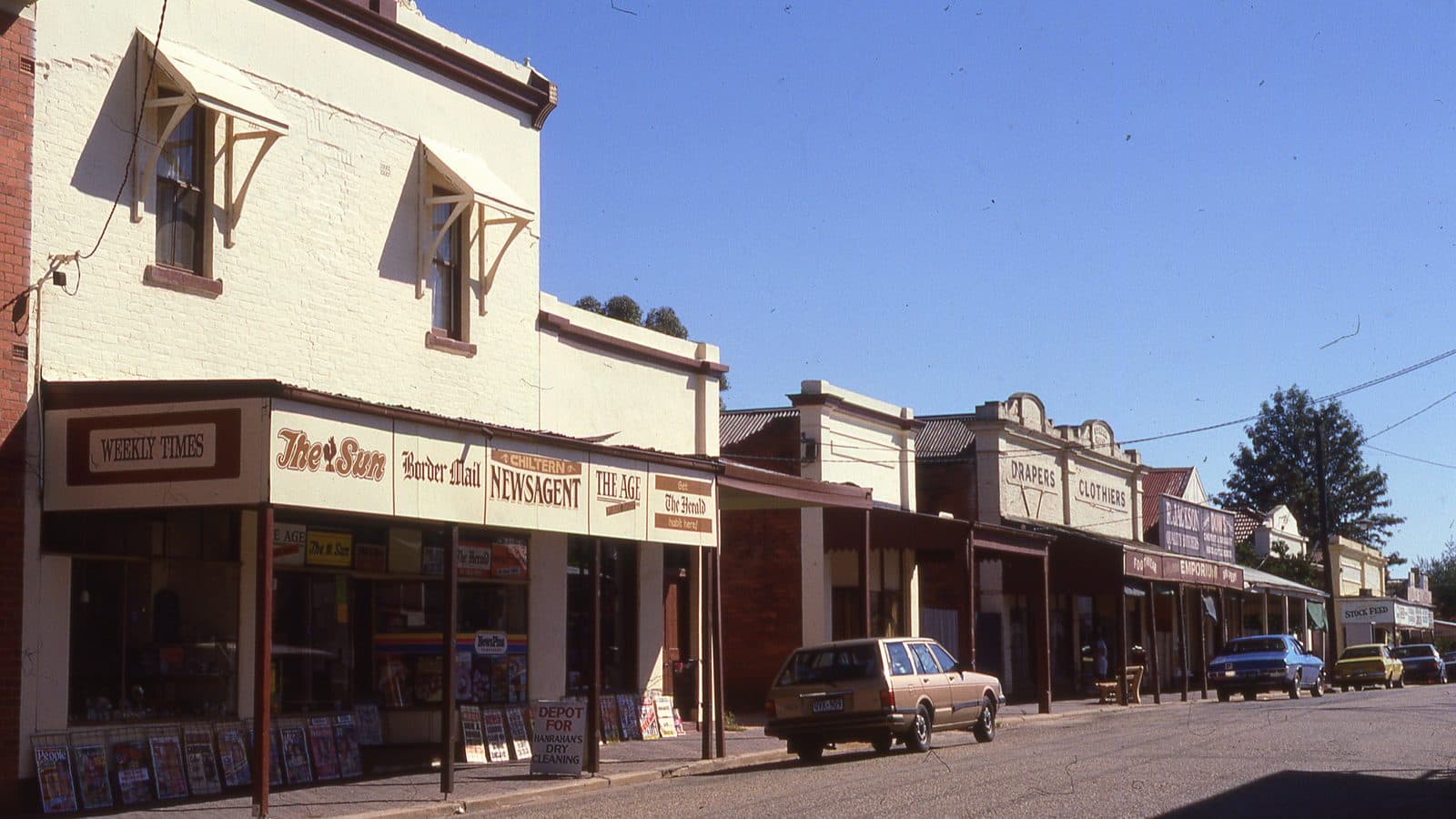
When Disney turned Chiltern into a town called Barambogie
In 1974 a Disney crew gravelled Chiltern's main street, took the signs down and filmed the town as a place called Barambogie. What changed, and what stayed.
Read